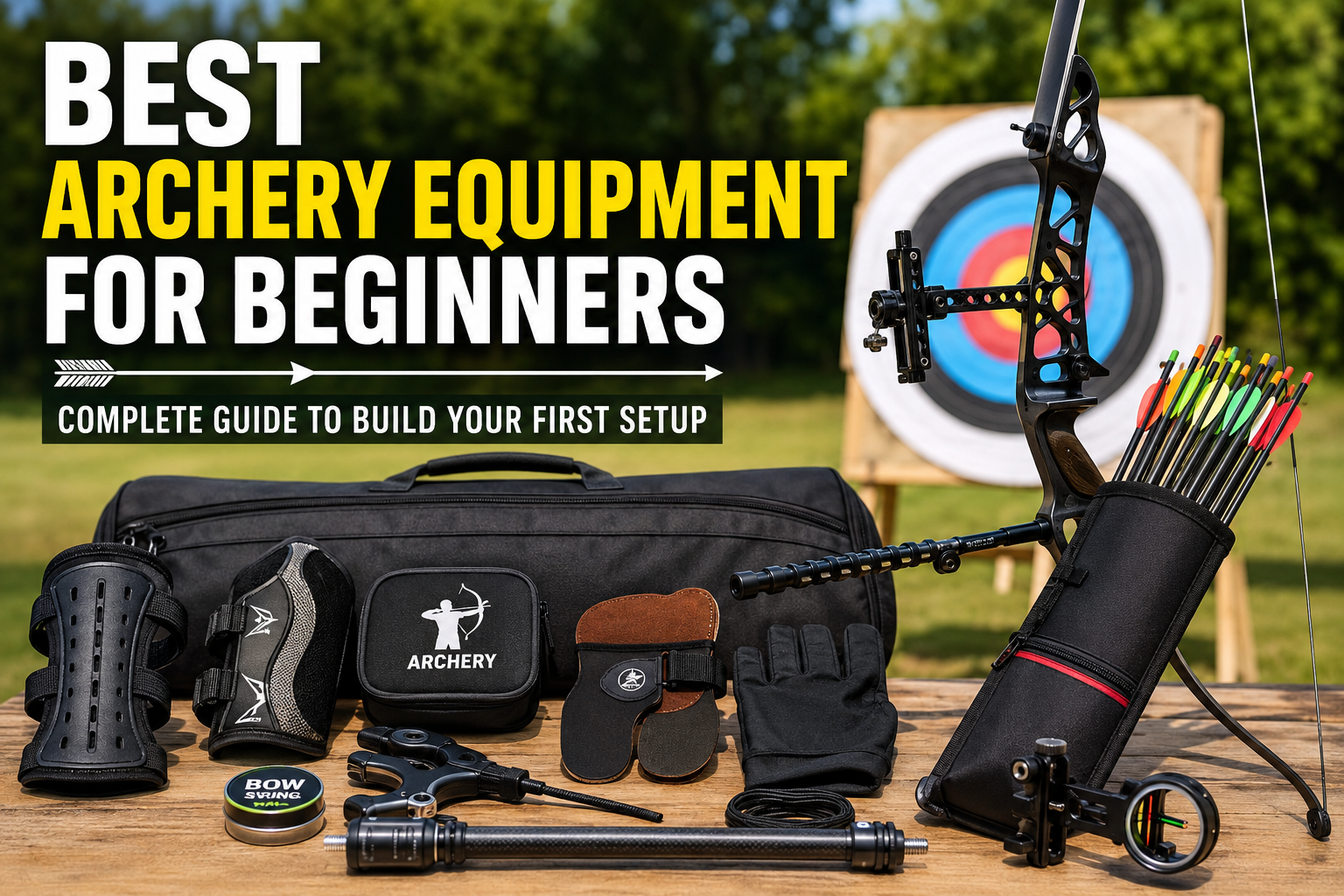

First of all, starting archery is exciting, but choosing the right equipment can feel overwhelming. With so many bows, arrows, and accessories available, beginners often spend money on gear they don't actually need. This guide will help you understand and find the essential archery equipment for beginners, explain why each item matters, and help you make smart buying decisions that improve safety, accuracy, and enjoyment.
Whether you're planning to shoot targets in your backyard, join an archery club, or eventually go bowhunting (where legal), the right equipment will make learning easier and more enjoyable.
If you're new to archery, you don't need to buy every accessory immediately. Start with the essentials and upgrade as your skills improve.tarting with quality equipment helps you develop proper shooting form while reducing frustration caused by poorly made gear.
Best Archery Equipment for Beginners 2026
Every archer eventually builds their own gear collection. Some accessories are essential from day one, while others become useful as your experience grows.
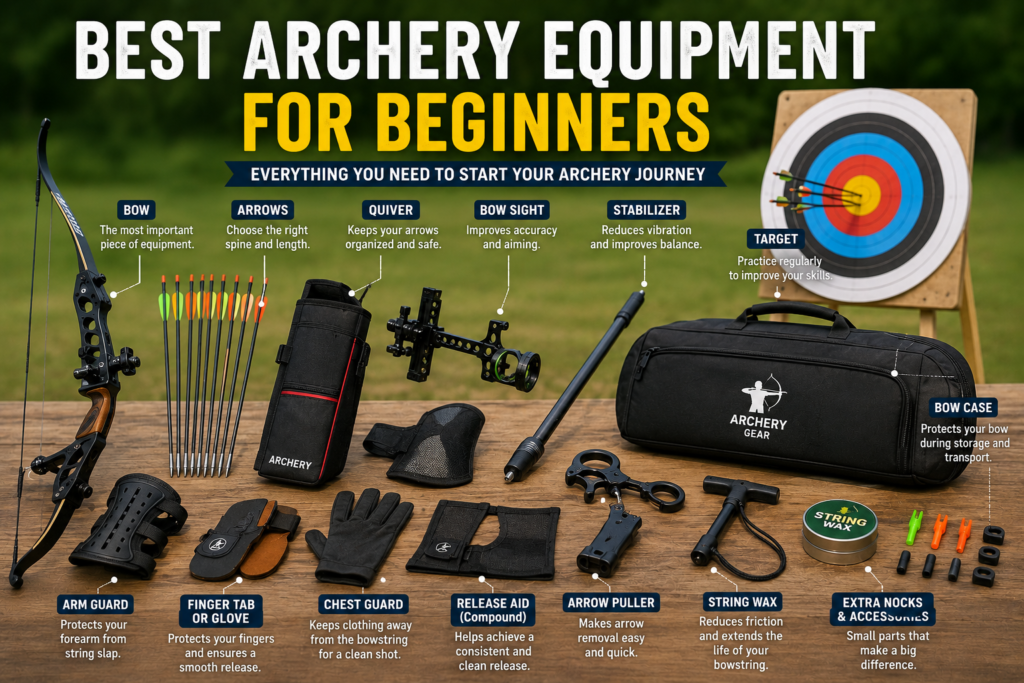
| Equipment | Recommended for Beginners |
|---|---|
| Bow | ✅ Essential |
| Arrows | ✅ Essential |
| Bowstring | ✅ Essential |
| Arm Guard | ✅ Essential |
| Finger Tab | ✅ Essential for recurve |
| Archery Glove | ✅ Alternative to finger tab |
| Target | ✅ Essential |
| Quiver | ✅ Highly Recommended |
| Arrow Case | Recommended |
| Bow Case | Recommended |
| Bow Sight | Optional |
| Stabilizer | Optional |
| Release Aid | Compound bows only |
| Chest Guard | Recommended |
| Arrow Puller | Recommended |
| Bow String Wax | Recommended |
| Extra Nocks | Recommended |
| Silencers | Optional |
| Limbs (Recurve Bow) | Replacement/Upgrade |
| Riser | Main bow component |
1. Bow – The Most Important Piece of Archery Equipment
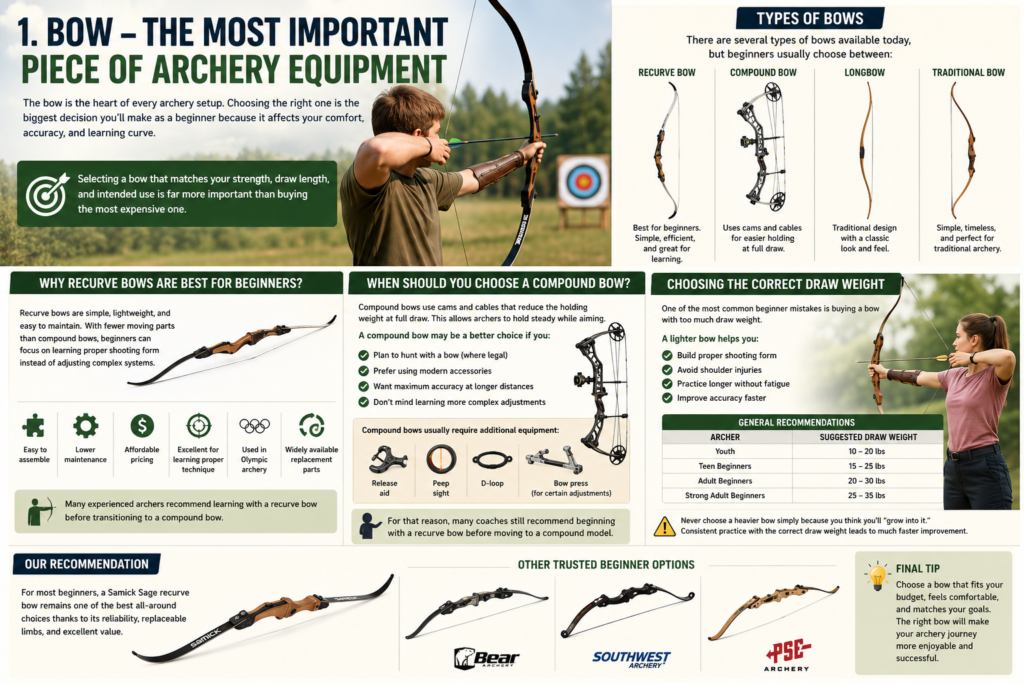
The bow is the heart of every archery setup. Choosing the right one is the biggest decision you'll make as a beginner because it affects your comfort, accuracy, and learning curve.
Many new archers assume buying the most expensive bow will make them shoot better. In reality, selecting a bow that matches your strength, draw length, and intended use is far more important.
There are several types of bows available today, but beginners usually choose between:
- Recurve Bow
- Compound Bow
- Longbow
- Traditional Bow
Moreover, for most new archers, recurve bows provide the easiest introduction to the sport.
Why Recurve Bows Are Best for Beginners?
Recurve bows are simple, lightweight, and easy to maintain. Because they have fewer moving parts than compound bows, beginners can focus on learning proper shooting form instead of adjusting complex mechanical systems.
Benefits include:
- Easy to assemble
- Lower maintenance
- Affordable pricing
- Excellent for learning proper technique
- Used in Olympic archery
- Widely available replacement parts
Besides, many experienced archers actually recommend learning with a recurve bow before transitioning to a compound bow.
When Should You Choose a Compound Bow?
Compound bows use cams and cables that reduce the holding weight at full draw. This allows archers to hold steady while aiming.
A compound bow may be a better choice if you:
- Plan to hunt with a bow (where legal)
- Prefer using modern accessories
- Want maximum accuracy at longer distances
- Don't mind learning more complex adjustments
However, compound bows usually require additional equipment such as:
- Release aid
- Peep sight
- D-loop
- Bow press for certain adjustments
For that reason, many coaches still recommend beginning with a recurve bow before moving to a compound model.
Choosing the Correct Draw Weight
One of the most common beginner mistakes is buying a bow with too much draw weight.
A lighter bow helps you:
- Build proper shooting form
- Avoid shoulder injuries
- Practice longer without fatigue
- Improve accuracy faster
General recommendations:
| Archer | Suggested Draw Weight |
|---|---|
| Youth | 10–20 lbs |
| Teen Beginners | 15–25 lbs |
| Adult Beginners | 20–30 lbs |
| Strong Adult Beginners | 25–35 lbs |
In addition, never choose a heavier bow simply because you think you'll "grow into it." Consistent practice with the correct draw weight leads to much faster improvement.
Our Recommendation
For most beginners, a Samick Sage recurve bow remains one of the best all-around choices thanks to its reliability, replaceable limbs, and excellent value. Other trusted beginner options from Bear Archery and Southwest Archery are also worth considering, depending on your budget.
Related Reading: Best Recurve Bow for Beginners
2. Arrows – Choosing the Right Arrows Matters
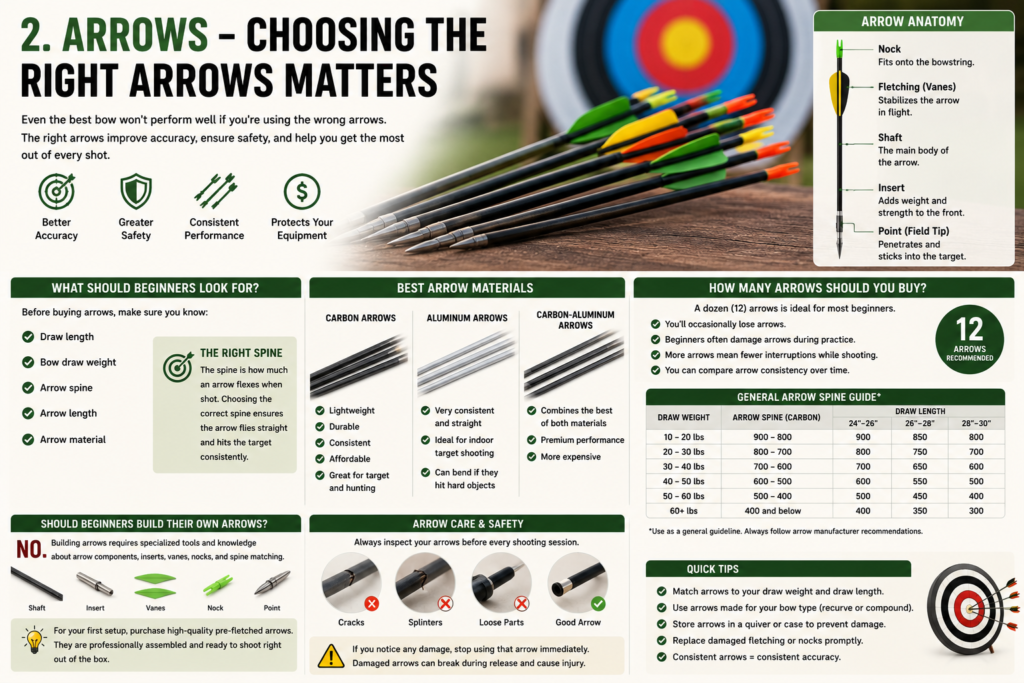
Even the best bow won't perform well if you're using the wrong arrows.
Many beginners focus entirely on buying a bow but overlook arrow selection. Unfortunately, poorly matched arrows can reduce accuracy, damage equipment, and create safety issues.
What Should Beginners Look For?
Before buying arrows, you should know:
- Draw length
- Bow draw weight
- Arrow spine
- Arrow length
- Arrow material
The spine refers to how much an arrow flexes during the shot. Selecting the correct spine ensures the arrow flies consistently toward the target.
Best Arrow Materials
Today's arrows are available in several materials.
Carbon Arrows
Carbon arrows are the most popular choice for beginners because they are:
- Lightweight
- Durable
- Consistent
- Affordable
- Suitable for target shooting and hunting
Aluminum Arrows
Aluminum arrows are known for their straightness and consistency. They are often used for indoor target shooting but can bend if they strike hard objects.
Carbon-Aluminum Arrows
These premium arrows combine the advantages of both materials but usually cost more than beginners need to spend.
Should Beginners Build Their Own Arrows?
Generally, no.
Building arrows requires specialized tools and knowledge about arrow components, inserts, vanes, nocks, and spine matching.
For your first setup, purchasing high-quality pre-fletched arrows is the smarter option. They are professionally assembled and ready to shoot right out of the box.
Once you gain more experience, you can learn how to customize arrows for improved performance.
How Many Arrows Should You Buy?
A common question among beginners is how many arrows they need.
A dozen arrows (12) is usually ideal because:
- You'll occasionally lose arrows.
- Beginners often damage arrows during practice.
- More arrows mean fewer interruptions while shooting.
- You can compare arrow consistency over time.
Always inspect arrows before every shooting session. If you notice cracks, splinters, or loose components, stop using that arrow immediately, as damaged arrows can break during release and cause injury.
3. Archery Targets – Build Accuracy with the Right Target
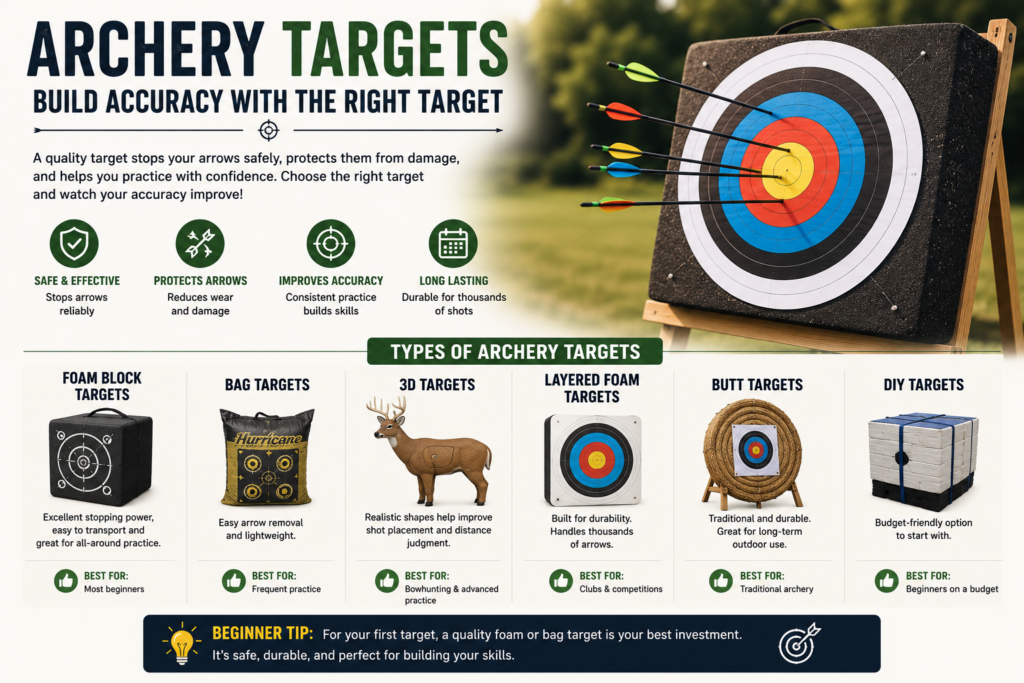
A quality target is one of the most important investments for any beginner. Even the best bow and arrows won't help you improve if you're practicing on the wrong type of target.
Also, the right target safely stops your arrows, protects them from unnecessary damage, and allows you to practice consistently. Different targets are designed for different arrow types, bow draw weights, and shooting styles.
Types of Archery Targets
There are several types of archery targets available today, each designed for a specific purpose.
Foam Block Targets
Foam block targets are the most popular option for beginners. They are lightweight, portable, and designed to stop both field points and, in some cases, broadheads.
Pros
- Excellent stopping power
- Easy arrow removal
- Lightweight and portable
- Long-lasting with proper care
- Great for backyard practice
- Best for: Most beginners using recurve or compound bows.
Bag Targets
Bag targets are filled with compressed synthetic material that effectively stops field-point arrows.
They are an excellent choice if you practice frequently because arrows are easy to remove, reducing fatigue during long shooting sessions.
Pros
- Extremely easy arrow removal
- Durable for regular practice
- Affordable
- Beginner-friendly
Cons
- Not suitable for broadheads
Best for: Daily target shooting.
3D Archery Targets
3D targets are designed to resemble real animals and are commonly used by bowhunters to practice realistic shot placement.
They help improve judging distance, shooting angles, and hunting accuracy.
Best for
- Bowhunting practice
- Advanced beginners
- Competitive 3D archery
Layered Foam Targets
Layered foam targets use multiple compressed foam layers that absorb arrow impact effectively.
Many clubs and competitions use these targets because they withstand thousands of shots.
DIY Homemade Targets
Some beginners build homemade targets using cardboard, foam sheets, or compressed fabric.
While inexpensive, homemade targets rarely last as long as commercial options and may not stop high-powered compound bows safely.
Which Target Should Beginners Buy?
If you're buying your first target, a high-quality foam block target is usually the best option.
It offers:
- Excellent durability
- Easy transportation
- Safe arrow stopping
- Good value for money
If you plan to shoot several times each week, a bag target is another excellent investment because removing arrows requires much less effort.
Related Reading: Best Archery Targets for Beginners
4. Arm Guard – Protect Your Forearm
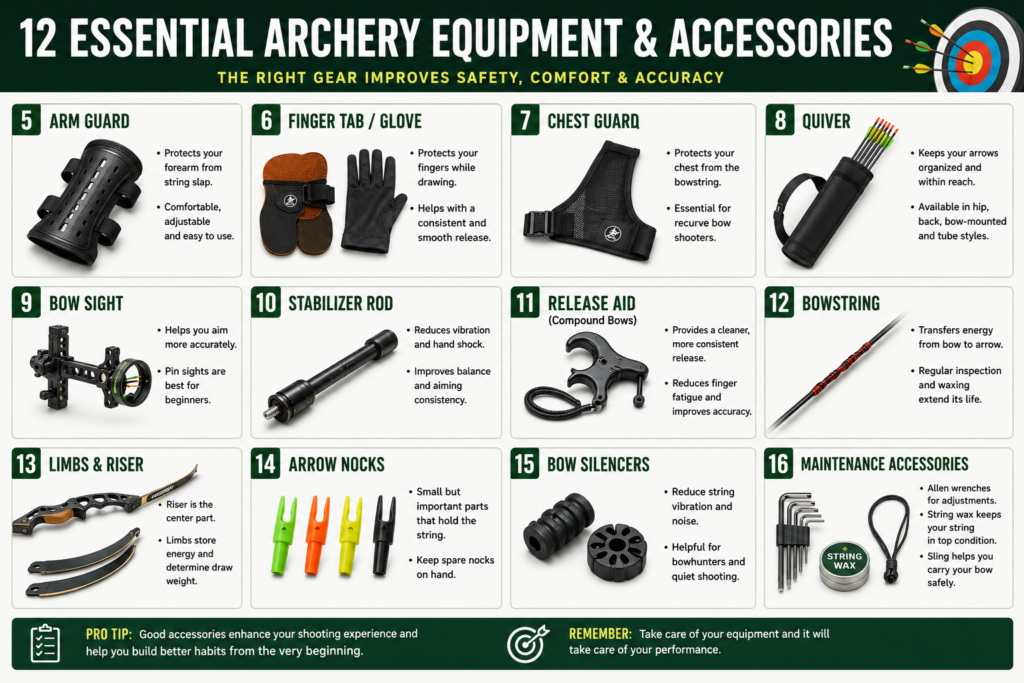
One of the first lessons every beginner learns is that bowstrings can hurt when they strike your forearm.
An arm guard protects your forearm from string slap while helping keep loose clothing away from the bowstring during the shot.
Although experienced archers sometimes shoot without one, most coaches recommend wearing an arm guard until your shooting form becomes consistent.
Benefits of an Arm Guard
- Prevents painful string slap
- Improves shooting confidence
- Keeps sleeves out of the bowstring
- Helps beginners maintain proper arm position
- Lightweight and comfortable
Most arm guards are made from:
- Leather
- Nylon
- Rubber
- Carbon composite
So, choose an adjustable model that fits securely without restricting movement.
5. Finger Tab vs. Archery Glove
Drawing a bowstring repeatedly places significant pressure on your fingers.
Without protection, beginners often experience soreness, blisters, or discomfort after only a short practice session.
Fortunately, two accessories solve this problem:
- Finger tabs
- Archery gloves
Both are effective, but each offers a slightly different shooting experience.
Finger Tabs
A finger tab is a flat piece of leather or synthetic material worn between your fingers and the bowstring.
It protects your fingers while allowing a clean, smooth string release.
Many Olympic recurve archers prefer finger tabs because they offer excellent consistency and precision.
Advantages
- Smooth string release
- Better shooting consistency
- Lightweight
- Affordable
- Excellent for target archery
Choosing the Right Size
A finger tab should fit comfortably without sliding around your fingers.
An oversized tab can interfere with your anchor point and reduce shooting accuracy, while one that's too small won't provide adequate protection. We have a complete guide to choosing the best Archery Finger Tab .
Archery Gloves
Archery gloves cover the drawing fingers individually and provide more flexibility than finger tabs.
Many traditional archers and recreational shooters prefer gloves because they feel natural and require little adjustment.
Advantages
- Comfortable for long practice sessions
- Natural hand movement
- Easy to wear
- Durable
- Great for recreational shooting
Which Is Better for Beginners?
There isn't a universal answer.
Choose a finger tab if you:
- Want maximum shooting consistency
- Plan to compete
- Shoot a recurve bow regularly
Choose an archery glove if you:
- Prefer comfort
- Enjoy traditional archery
- Want a simple solution for casual shooting
Many experienced archers eventually own both and switch depending on the type of shooting they are doing.
6. Chest Guard – A Small Accessory That Improves Comfort
A chest guard may not seem essential at first, but it can make shooting much more comfortable—especially if you're wearing loose clothing or bulky jackets.
A chest guard keeps clothing close to your body so the bowstring doesn't catch fabric during the shot.
It also provides light protection from string contact.
Who Should Wear a Chest Guard?
A chest guard is recommended for:
- Beginners
- Competitive target archers
- Archers wearing loose clothing
- Male and female shooters
If you're right-handed, wear the chest guard over your left shoulder and chest.
If you're left-handed, wear it over your right shoulder and chest.
Most chest guards are lightweight, breathable, and adjustable, making them comfortable even during extended practice sessions.
7. Bow Case – Protect Your Investment
Many beginners focus on buying a quality bow but forget how important proper storage and transportation can be.
A bow case protects your equipment from:
- Dust
- Moisture
- Scratches
- Accidental impacts
- Transportation damage
Even a minor bump during travel can affect accessories like sights or stabilizers.
Types of Bow Cases
Soft Bow Cases
Soft cases are lightweight, affordable, and ideal for transporting bows to your local range.
Hard Bow Cases
Hard cases offer maximum protection and are recommended if you travel frequently or transport expensive equipment.
Although they cost more, they provide superior protection against impacts and weather.
8. Arrow Puller – Save Your Hands
Many beginners are surprised by how difficult it can be to remove arrows from dense foam targets.
An arrow puller is a small rubber accessory that provides extra grip, making arrow removal much easier.
Benefits
- Reduces hand fatigue
- Improves grip
- Protects arrow shafts
- Makes practice faster
- Inexpensive and durable
It's a small purchase that quickly becomes one of the most useful items in your gear bag.
9. String Wax – Increase Bowstring Life
Your bowstring experiences constant friction and tension every time you shoot.
Applying string wax regularly helps:
- Prevent fraying
- Reduce wear
- Improve string longevity
- Maintain consistent performance
Most manufacturers recommend waxing the string after several shooting sessions or whenever it begins to look dry or fuzzy.
This simple maintenance habit can significantly extend the life of your bowstring and reduce replacement costs.
Common Beginner Mistakes to Avoid
Many new archers buy equipment without understanding how each accessory contributes to safety and performance. Avoid these common mistakes:
- Practicing without an arm guard.
- Using damaged or cracked arrows.
- Buying a target that isn't designed for your bow's draw weight.
- Choosing finger protection that doesn't fit properly.
- Transporting your bow without a protective case.
- Neglecting routine bowstring maintenance.
Developing good habits from the beginning will make your learning experience safer, more enjoyable, and more rewarding.
10. Quivers – Keep Your Arrows Organized and Ready
A quiver is one of the most practical pieces of archery equipment. It keeps your arrows secure, organized, and within easy reach, allowing you to focus on shooting instead of picking arrows up from the ground.
While it's possible to practice without a quiver, most beginners quickly realize how much easier and safer shooting becomes when arrows are stored properly.
Besides convenience, a quiver also helps protect your arrows from damage during transportation and practice.
Types of Archery Quivers
Different styles are available, and each serves a different purpose.
Hip Quiver
Hip quivers attach to your belt and hang beside your leg.
They are the preferred choice for many target archers because arrows are easy to access without interfering with your shooting stance.
Best for:
- Target archery
- Beginners
- Club shooting
- Competitions
Back Quiver
Back quivers are worn over the shoulder and rest on your back.
Although they are popular in movies and historical reenactments, they are generally less practical for beginners because retrieving arrows can be slower.
Best for:
- Traditional archery
- Recreational shooting
- Historical demonstrations
Bow-Mounted Quiver
A bow-mounted quiver attaches directly to the bow.
This design is especially popular among bowhunters because it allows them to carry arrows without additional gear.
Best for:
- Bowhunting
- Compound bows
- Field archery
Tube Quiver
Tube quivers completely enclose the arrows, offering extra protection during transport.
They are often used by archers who travel frequently or carry multiple arrows to tournaments.
How Many Arrows Can a Quiver Hold?
Most beginner quivers hold between 5 and 20 arrows, depending on the design.
For recreational target shooting, a quiver that carries 6–12 arrows is usually more than enough.
Which Quiver Should Beginners Buy?
A lightweight hip quiver is the best choice for most new archers. It is comfortable, affordable, and works well for both indoor and outdoor practice.
Related Reading: Best Archery Quivers for Beginners
11. Bow Sight – Improve Your Accuracy
A bow sight helps archers aim more consistently by providing a fixed reference point.
Although many traditional archers prefer instinctive shooting without a sight, most beginners find that a bow sight shortens the learning curve and improves accuracy.
Types of Bow Sights
Fixed Pin Sight
The most common option for beginners.
Each pin is preset for a specific distance, making aiming simple and intuitive.
Adjustable Sight
These sights allow you to adjust your aiming point for different distances.
They offer greater precision but require more setup and practice.
Olympic Recurve Sight
Olympic-style recurve sights feature highly adjustable elevation and windage settings, making them ideal for target competitions.
Do Beginners Need a Bow Sight?
Not necessarily.
If you're learning traditional or instinctive archery, you can start without one.
However, if your goal is consistent target accuracy, adding a quality bow sight can make learning easier.
12. Stabilizer Rod – Reduce Vibration and Improve Balance
A stabilizer rod extends from the front of the bow and helps reduce vibration after each shot.
It also improves balance by shifting the bow's center of gravity, making it easier to hold steady while aiming.
Benefits of a Stabilizer
- Reduces hand shock
- Improves bow balance
- Helps maintain steady aim
- Reduces vibration
- Increases shooting consistency
For beginners, a short stabilizer is usually sufficient. Longer stabilizers become more beneficial as your skills improve and you begin shooting at greater distances.
13. Release Aid – Essential for Compound Bows
Unlike recurve archers, compound bow shooters often use a release aid instead of their fingers.
A release aid attaches to the bowstring or D-loop and releases the string with the pull of a trigger or hinge mechanism.
This creates a cleaner release and improves shot consistency.
Advantages
- More consistent shots
- Reduces finger fatigue
- Improves accuracy
- Easier to maintain proper anchor point
- Ideal for hunting and target shooting
If you plan to shoot a recurve bow, you won't need a release aid. Instead, use a finger tab or archery glove.
14. Bowstring – Don't Overlook This Critical Component
The bowstring transfers stored energy from the bow to the arrow.
Even though it looks simple, it plays a major role in your bow's performance.
A worn or damaged string can reduce accuracy and may even become unsafe to use.
Bowstring Maintenance Tips
- Inspect the string before every shooting session.
- Apply string wax regularly.
- Replace worn serving material promptly.
- Avoid storing your bow in extreme heat or humidity.
- Replace damaged strings immediately.
Routine maintenance extends string life and helps maintain consistent arrow speed.
15. Limbs and Riser – Understanding Your Bow
If you're using a takedown recurve bow, it's helpful to understand its two main components.
Riser
The riser is the central section of the bow.
It holds:
- Limbs
- Arrow rest
- Bow sight
- Stabilizer
- Grip
Choosing a comfortable riser improves overall shooting confidence and control.
Limbs
The limbs store energy as you draw the bow and release that energy to propel the arrow.
Many beginner recurve bows feature interchangeable limbs, allowing you to upgrade draw weight without replacing the entire bow.
This makes takedown recurve bows an excellent long-term investment.
Bow Maintenance Accessories
Proper maintenance keeps your equipment performing at its best and extends its lifespan.
Consider adding these inexpensive accessories to your gear bag:
Allen Wrench Set
Most modern bows require Allen keys for adjustments.
Use them to:
- Tighten accessories
- Adjust sights
- Install stabilizers
- Replace components
Bow Sling
A bow sling prevents you from dropping your bow after the shot.
Many target archers use wrist slings because they allow for a relaxed grip without sacrificing control.
Bow Case
A dedicated bow case protects your equipment during storage and transportation, reducing the risk of accidental damage.
Spare Field Points
Field points occasionally become damaged or lost.
Keeping extras on hand ensures you can continue practicing without interruption.
Building Your First Archery Kit
If you're buying your first set of equipment, focus on the essentials rather than every available accessory.
A practical beginner setup includes:
- Recurve or compound bow
- Correctly matched arrows
- Arm guard
- Finger tab or release aid
- Target
- Quiver
- String wax
- Bow case
- Arrow puller
As your skills develop, you can gradually add accessories like stabilizers, advanced sights, and upgraded arrows based on your shooting style and goals.
19. How Much Does Beginner Archery Equipment Cost?
One of the first questions new archers ask is, "How much does it cost to get started with archery?"
The answer depends on the type of bow you choose and the quality of your equipment. The good news is that you don't need professional-grade gear to enjoy the sport or develop solid shooting skills.
A complete beginner setup can range from a few hundred dollars to over a thousand dollars, depending on whether you choose a recurve or compound bow.
Estimated Beginner Equipment Costs
| Equipment | Average Price (USD) |
|---|---|
| Beginner Recurve Bow | $150–$350 |
| Beginner Compound Bow | $350–$800+ |
| Carbon Arrows (12 Pack) | $40–$120 |
| Arm Guard | $10–$30 |
| Finger Tab | $10–$30 |
| Archery Glove | $15–$40 |
| Foam Target | $40–$120 |
| Bag Target | $40–$100 |
| Quiver | $20–$60 |
| Bow Case | $30–$100 |
| String Wax | $5–$15 |
| Arrow Puller | $10–$20 |
| Bow Sight | $40–$200 |
| Stabilizer | $30–$150 |
| Release Aid | $40–$150 |
Typical Budget for Beginners
A realistic budget for a complete setup is:
- Basic Recurve Setup: $250–$500
- Intermediate Recurve Setup: $500–$800
- Basic Compound Setup: $600–$1,000+
- Premium Compound Setup: $1,000–$2,000+
If you're completely new to archery, start with reliable, mid-range equipment instead of the cheapest options. Quality gear is generally more durable, safer, and easier to shoot consistently.
20. Best Archery Equipment Brands
Choosing equipment from a trusted manufacturer gives you better quality control, warranty support, and easier access to replacement parts.
The following brands are well-known among recreational shooters, target archers, and bowhunters.
Samick Sage
Samick remains one of the most recommended brands for beginner recurve bows thanks to its dependable performance and affordability.
The Samick Sage, in particular, has introduced countless archers to the sport.
Southwest Archery
Southwest Archery is another excellent option for affordable takedown recurve bows and replacement limbs.
Bear Archery
Bear Archery has been producing bows for decades and offers beginner-friendly recurve and compound bows that provide excellent value.
Best known for:
- Beginner bows
- Hunting bows
- Complete ready-to-shoot packages
Hoyt Archery
Hoyt is one of the most respected names in competitive target archery and premium compound bows.
Best known for:
- Olympic recurve bows
- High-performance compound bows
- Advanced engineering
Mathews
Mathews is widely recognized for producing premium compound bows with outstanding accuracy, smooth draw cycles, and innovative technology.
Best for:
- Serious target shooters
- Bowhunters
- Experienced archers
PSE Archery
PSE offers a wide selection of beginner, intermediate, and professional bows at different price points.
Their entry-level models are particularly popular among new archers.
Diamond Archery
Diamond, a subsidiary of Bowtech, specializes in adjustable compound bows that grow with the shooter.
Many beginners appreciate their wide draw-length and draw-weight adjustment ranges.
21. Common Mistakes Archery Beginners Should Avoid
Buying quality equipment is only part of the journey. Avoiding common mistakes will help you improve faster and protect your investment.
1. Choosing Too Much Draw Weight
This is the most common mistake new archers make.
A bow that's too heavy can lead to poor shooting form, shoulder fatigue, and inconsistent accuracy.
Start with a manageable draw weight and increase it only after developing proper technique.
2. Buying the Cheapest Equipment Available
Low-quality bows and accessories may seem like a bargain, but they often lack durability and consistency.
Investing in reliable beginner equipment usually saves money over time.
3. Ignoring Draw Length
Using arrows that don't match your draw length can reduce accuracy and affect safety.
Always measure your draw length before purchasing arrows or a bow.
4. Skipping Safety Accessories
Many beginners underestimate the importance of items such as:
- Arm guards
- Finger tabs
- Chest guards
These inexpensive accessories prevent injuries and make practice sessions much more comfortable.
5. Poor Equipment Maintenance
Simple maintenance tasks such as waxing your bowstring, inspecting arrows, and tightening screws can prevent many common equipment issues.
6. Buying Every Accessory Immediately
You don't need every accessory on your first day.
Start with the essentials and upgrade gradually as your skills improve and you better understand your shooting style.
22. Beginner Archery Equipment Checklist
Use this checklist before your first practice session.
Essential Equipment
1. Bow
2. Arrows
3.Target
4. Finger Tab or Glove
5. Arm Guard
Highly Recommended
6.Quiver
7.Bow Case
8. Arrow Puller
9. String Wax
Optional Upgrades
10. Bow Sight
11. Stabilizer
12. Release Aid (Compound)
13.Chest Guard
14. Bow Sling
Keeping this checklist handy can help ensure you don't overlook an important piece of equipment.
23. Beginner Safety Tips
Archery is one of the safest outdoor sports when proper safety rules are followed. Developing good habits from the start will help protect both you and those around you.
Here are a few essential safety tips:
- Always inspect your bow and arrows before shooting.
- Never shoot a damaged arrow or bowstring.
- Make sure your target has a safe backstop.
- Never point a bow at a person, even if it isn't drawn.
- Only retrieve arrows after everyone has finished shooting.
- Wear protective gear such as an arm guard and finger tab.
- Follow all range rules if you're practicing at an archery club.
- Store bows and arrows safely when not in use.
Taking a few extra moments to check your equipment before each session can prevent accidents and help your gear last longer.
Do You Need a License to Practice Archery?
One of the most common questions beginners ask is whether they need a license before purchasing a bow or practicing archery.
In the United States, you do not need a license to own or use a standard recurve bow or compound bow for recreational target shooting. However, laws vary by state and local municipality, especially regarding where you can shoot and transport archery equipment.
If you plan to hunt with a bow, you'll usually need:
- A valid hunting license
- Any required archery permits or tags
- To follow your state's hunting regulations and seasons
Before practicing in your backyard or on private property, always check local ordinances to ensure archery is permitted in your area.
Pro Tip: If you're unsure about local regulations, contact your state wildlife agency or visit its official website before purchasing equipment.
Where Is the Best Place to Buy Archery Equipment?
Buying archery equipment online has become easier than ever. Online retailers often offer a wider selection, competitive prices, and customer reviews that help you compare products before making a purchase.
Here are some of the most trusted places to shop:
Amazon
Amazon is one of the best places for beginners because it offers:
- A huge selection of bows and accessories
- Verified customer reviews
- Fast shipping
- Easy returns on eligible products
- Competitive pricing
It's an excellent choice if you're comparing multiple beginner bows or looking for complete starter kits.
Lancaster Archery Supply
Lancaster Archery Supply is one of the largest dedicated archery retailers in the United States. They carry equipment for beginners, target archers, traditional shooters, and bowhunters.
3Rivers Archery
If you're interested in traditional archery or recurve bows, 3Rivers Archery is a popular destination with a strong selection of traditional equipment.
Other Trusted Archery Retailers
You may also find quality equipment from reputable retailers such as:
- Archery World
- The Archery Shop
- Wales Archery
- Hi-Tech Archery
- Archery Warehouse
- Triple X Archery
Whenever possible, purchase from trusted retailers that provide manufacturer warranties and responsive customer support.
Frequently Asked Questions
What is the most important archery equipment for a beginner?
The bow and arrows are the foundation of every archery setup. Without them, you can't begin practicing. However, beginners should also invest in essential safety equipment such as an arm guard, finger tab or glove, and a suitable target. A quiver and bow case are highly recommended because they make practice sessions more organized and protect your equipment during transportation.
What is the best bow for beginner archers?
For most beginners, a recurve bow is the best choice. It has a simple design, requires less maintenance than a compound bow, and helps new archers develop proper shooting form.
If your long-term goal is competitive target shooting or bowhunting, you can always upgrade to a compound bow after gaining experience.
How many arrows should a beginner buy?
A dozen arrows (12) is ideal for most beginners.
Having multiple arrows allows you to practice longer without constantly retrieving them and provides backups if one becomes damaged or lost.
Should beginners buy carbon or aluminum arrows?
Carbon arrows are generally the best option for beginners because they are lightweight, durable, and resistant to bending.
Aluminum arrows are also accurate but can bend after repeated impacts with hard objects.
What draw weight should a beginner use?
Most adult beginners should start with a draw weight between 20 and 30 pounds when using a recurve bow.
Choosing a lighter draw weight helps you develop proper technique and reduces the risk of shoulder strain.
Is archery an expensive hobby?
Not necessarily.
A quality beginner setup usually costs between $250 and $500, depending on the type of bow and accessories you choose.
You don't need premium equipment to enjoy archery or improve your shooting skills.
Can I practice archery in my backyard?
That depends on your local laws and available space.
Before setting up a backyard range, make sure:
- Archery is legal in your area.
- You have a safe backstop behind your target.
- There is no risk to neighbors, pets, or nearby property.
Always prioritize safety and follow local regulations.
How long does archery equipment last?
With proper maintenance, quality archery equipment can last for many years.
Regularly inspect your bow, arrows, and bowstring for signs of wear, replace damaged components promptly, and store your gear in a cool, dry place.
Final Thoughts
Choosing the best archery accessories for beginners doesn't have to be complicated. While there are countless accessories available, you don't need to purchase everything on your first day.
Start with the essentials:
- A beginner-friendly bow
- Properly matched arrows
- A quality target
- Finger protection
- An arm guard
- A reliable quiver
As your confidence and skills grow, you can gradually upgrade your equipment with accessories such as bow sights, stabilizers, release aids, and premium arrows.
Most importantly, choose equipment that fits your body, matches your goals, and encourages regular practice. Consistency matters far more than owning the most expensive gear.
Whether you're interested in recreational target shooting, joining an archery club, or preparing for bowhunting, investing in quality beginner equipment will make your learning experience safer, more enjoyable, and far more rewarding.
Related Articles on ArcheryOutdoor.com
Keep learning with these beginner-friendly guides:
- Best Recurve Bows for Beginners
- Best Compound Bows for Beginners
- Best Archery Targets
- Best Archery Quivers
- Best Carbon Arrows
- How to Choose the Correct Draw Length
- Recurve Bow vs Compound Bow
- Archery Tips for Beginners
- How to Maintain Your Bow
- Common Archery Mistakes New Shooters Make